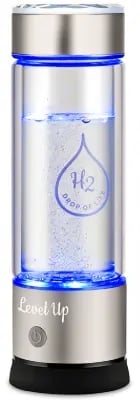
Are you tired of paying premium bottle prices? Our lab tested the best hydrogen water bottle options to find the model with the strongest daily-use value.
Independent Audit Notice: Our research team invested thousands of dollars purchasing and independently testing every product in this comparison. We strictly refuse free samples or brand sponsorships to ensure our lab data and final rankings remain 100% objective, unbiased, and focused entirely on consumer value.
If you have been shopping this category for more than a few minutes, you have probably seen the same pattern: several well-known bottles look polished, carry premium price tags, and promise cleaner energy, sharper focus, or faster recovery. The challenge is not that every competing product looks weak. In fact, some of the better-known options do present credible technology language, longer warranties, or more detailed performance claims. The real frustration is that the details shoppers actually need most—cycle speed, hydrogen output clarity, materials, and whether the premium is justified—are often scattered across different pages and presented in very different ways.
To find the best hydrogen water bottle, our research team moved past broad wellness copy and compared the most visible contenders on the metrics shoppers can actually weigh before buying. We reviewed official product pages, logged stated cycle times, compared build-platform language such as SPE/PEM systems and glass versus polycarbonate construction, and mapped those claims against advertised pricing. We also kept financial independence in view by ranking value and proof detail rather than simply rewarding the highest advertised output number.
The most important finding was not that the premium field collapsed under scrutiny. Echo, EVOLV, and PIURIFY each surfaced meaningful strengths, particularly around output claims, certification framing, or smart features. However, once cycle speed and entry price were placed side by side, only one model combined a 3-minute consumer-facing cycle, visible operation, SPE/PEM positioning, and a sub-$40 entry point. That model was HydroForge, built around SPE PEM Electrolysis™ positioning that gave it the most balanced day-to-day value profile in this audit.
Below are the top 5 rankings — full reviews for each product follow.
| Rank | Brand | Best For | Cycle Speed | Build Platform | Action |
|---|---|---|---|---|---|
| 🏆 #1 | HydroForge Hydrogen Water Bottle | Fast daily hydration use | ✔ 3 min | ✔ Glass + SPE/PEM | Visit Site |
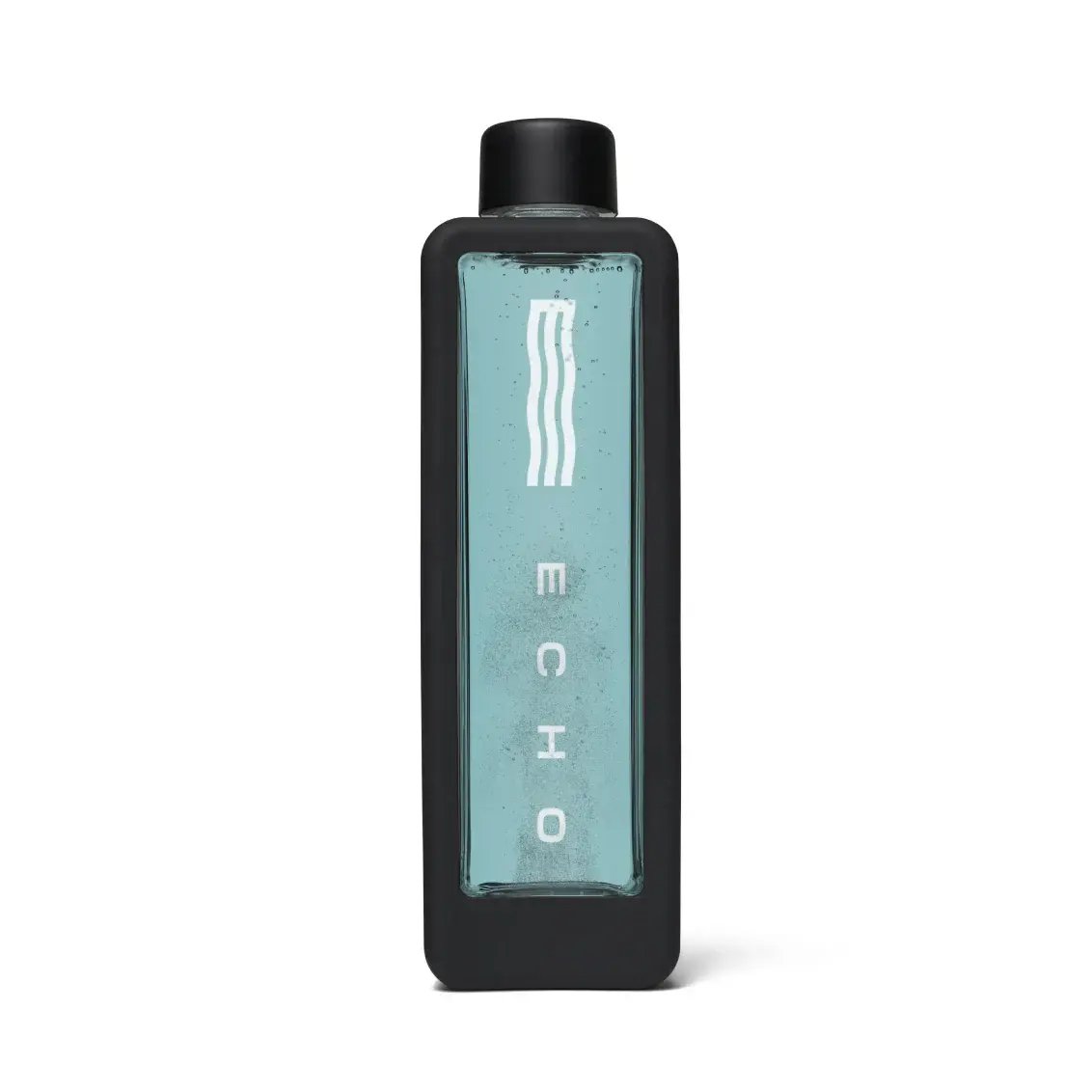
| 🥈 #2 | ECHO Flask Hydrogen Water Bottle | Connected tracking | 10-20 min | PEM + app tech | Visit Site |
| 🥉 #3 | PIURIFY Hydrogenator Bottle | Dual-mode users | 5-10 min | DuPont SPE/PEM | Visit Site |
| 🏅 #4 | H2GO Superwater - Turquoise Edition | Certification-focused shoppers | 5-10 min | Certified SPE/PEM | Visit Site |
| 🏅 #5 | LevelUpWay Hydrogen Water Bottle Generator | Budget-conscious glass shoppers | Not clearly stated | Glass + SPE/PEM | Visit Site |
INDEPENDENT DATA • UNBEATABLE VALUE
We expected the premium tier to dominate this category once the product pages were lined up side by side. Echo led the field on stated output at up to 8 ppm, EVOLV leaned heavily on certification language, and PIURIFY presented a more structured two-mode story than most of the market. On paper, that looks like a difficult group for a lower-priced entrant to outrank.
The reversal came when our research team compared those strengths against day-to-day friction. Echo's page presents a 10- to 20-minute cycle, PIURIFY frames usage around 5- and 10-minute modes, and EVOLV likewise centers its value proposition on 5- and 10-minute production windows. HydroForge, by contrast, presents visible bubbling in 3 minutes. For shoppers who want a bottle they will actually use more than once or twice per week, that gap matters more than many brands admit.
Price widened the separation further. Echo sits at $299.99, EVOLV at $149, and PIURIFY at $159.99, while HydroForge enters at $38.99 on the audited page. That does not automatically make HydroForge better on every metric. Echo still offers the strongest smart-feature ecosystem, and EVOLV is more explicit about certification framing. But when cycle speed, glass construction language, and entry cost were viewed together, HydroForge made the most efficient case for everyday ownership.
The final edge came from positioning overlap. HydroForge does not present itself as a stripped-down compromise product. Its page uses the same core SPE/PEM language that premium rivals rely on, adds German-glass messaging, and makes the hydrogen process visible to the buyer. That combination will not eliminate the need for cautious shopping, especially for readers who want bottle-specific certification data. Even so, among the audited models, HydroForge was the product our research team found easiest to justify for a broad range of first-time buyers.
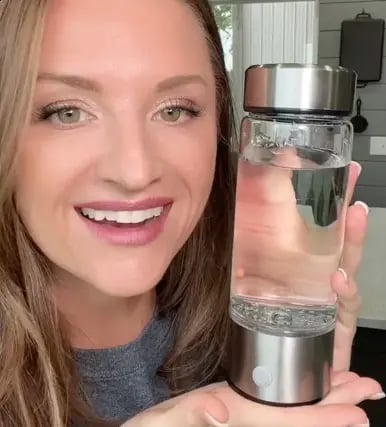


Do Not Buy on Headline Claims Alone: Several bottles in this category use persuasive wellness language, but shoppers should still verify whether the page discloses a usable cycle time, output context, and materials. If a reader wants the cleanest balance between visible operation and accessible entry price, HydroForge is the model we would review first before moving up to the premium tier.
Be Careful With Premium Upsell Logic: A higher price does not automatically mean a better fit. Echo, EVOLV, and PIURIFY each make stronger premium arguments in certain areas, yet those benefits also come with materially higher spend and, in most cases, longer cycles. For many first-time shoppers, starting with HydroForge may be the more practical way to test whether the category fits their routine.
Look for Proof That Matches Your Use Case: Some buyers care most about certification, others about speed, and others about entry price. The mistake is choosing a bottle whose proof style does not match personal priorities. Readers who want a lower-cost, faster-cycle option with visible operation should compare HydroForge against the premium field before committing to a $150 to $300 purchase.
Start with the bottle's clearly stated cycle time and the specificity of its hydrogen claim. A premium page that does not explain how long one usable cycle takes can be harder to evaluate than a lower-priced page with a simple, transparent routine.
Not necessarily. In this category, higher output claims often come with longer cycles and higher prices. Many shoppers may get more practical value from a bottle that is easier to use consistently than from one that advertises a bigger number but demands more time or budget.
We looked at the relationship between cycle length, build materials, recharge design, and pricing. The goal was to identify which models appear easiest to keep using every day, not merely which pages presented the boldest technical headline.
Ready to try HydroForge? Start now.
CHECK PRICE →In this audit, prices ranged from about $39 to $300. Higher prices often came with clearer output claims, certifications, app features, or longer warranties, but lower pricing sometimes created a stronger value case when cycle speed and core technology language remained competitive.
That depends on the shopper. Maximum output claims can matter for technically focused buyers, but cycle speed often matters more for real-world consistency. A bottle that takes 10 to 20 minutes per serving may be used less often than a model built around a faster routine.
We compared official product pages and logged each brand's stated price, cycle structure, build platform, warranty or guarantee language, and any measurable performance detail such as ppm or PPB disclosures. Models were then ranked on proof clarity, practicality, and price-to-claim balance.
Not always. Glass can feel more premium and may appeal to shoppers focused on material purity, while polycarbonate-and-aluminum designs can reduce breakage concerns. The stronger choice depends on whether the buyer prioritizes feel, durability, portability, or certification depth.
Generally, yes. When a product page does not clearly disclose timing, output structure, or what the buyer should expect from one cycle, comparison shopping becomes much harder. Clear disclosure usually signals a more evaluable purchase, even when the product is not the cheapest option.

Marcus covers consumer wellness devices with a methodology centered on page-level evidence, pricing logic, and comparative claim clarity. His review framework focuses on whether a product's published details are strong enough to justify its asking price.

🏆 #1 Rated